
Clear up the confusion! Do dried fruits make you gain weight? How many calories are they? Can diabetics eat them? We'll also reveal a list of the healthiest dried fruits and show you how to eat them without worrying about your blood sugar levels!
"I really want a snack, but I'm terrified of gaining weight. Maybe I'll just grab some dried fruit instead—it’s got to be healthier, right?"
If you are currently trying to lose weight or staying on top of your health, this exact thought has probably crossed your mind. But is that chewy midday snack actually doing your body any favors, or is it secretly packed with massive amounts of sugar and calories? Today, we are breaking it all down: how to enjoy it without gaining weight, and which types are truly the best for your health!
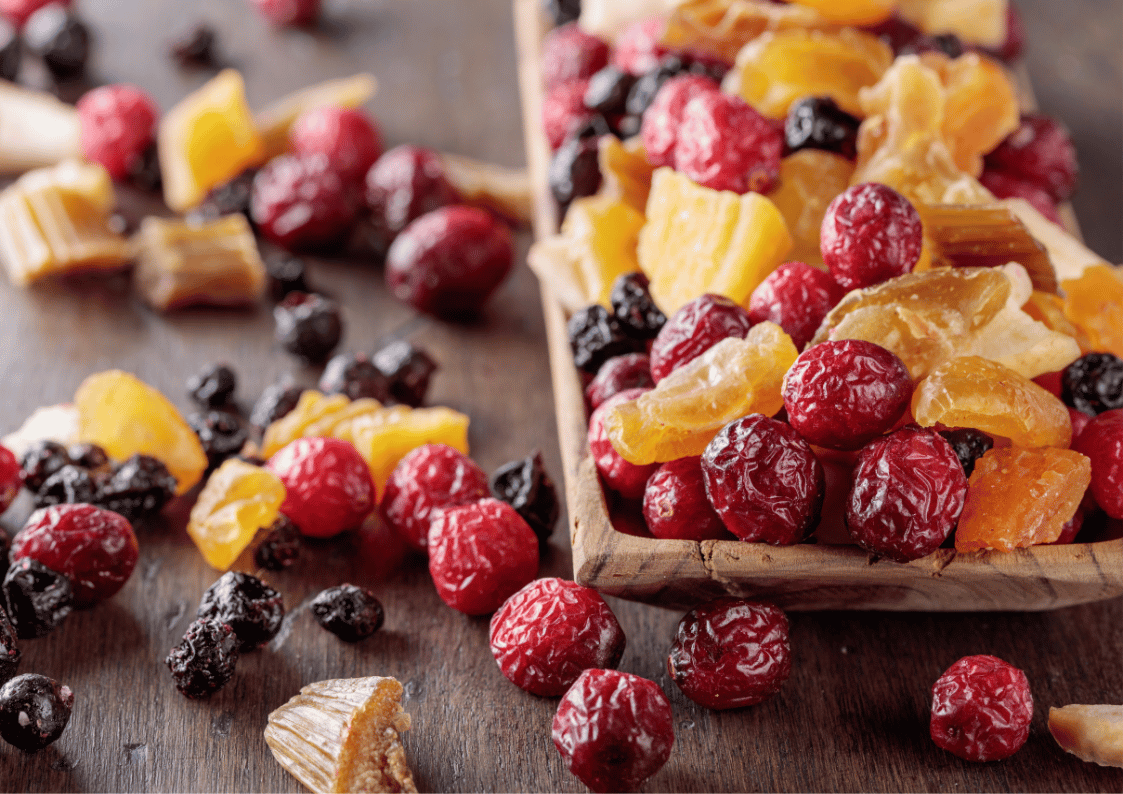
The short answer is: "It can easily lead to weight gain if consumed the wrong way."
Why is that? Imagine this: when fresh fruit undergoes the drying process, almost all of its water content evaporates. This causes its physical size to shrink drastically, while its "sugar and calorie content remain exactly the same."
Less Filling, Easier to Overeat: Eating 10 fresh grapes might start to fill you up because the water content keeps you satisfied. However, 10 raisins (dried grapes) shrink down to a tiny fraction of that size. This makes it incredibly easy to mindlessly eat them by the handful—which could easily equal a whole massive bunch of fresh grapes!
Concentrated Sugar: Gram for gram (e.g., per 100g), dried fruit contains 3 to 5 times more sugar and calories than its fresh counterpart.
On top of that, many commercially available dried fruits are often "candied" or "coated in sugar" to enhance flavor and extend shelf life. This hidden culprit is exactly what causes unexpected belly fat.
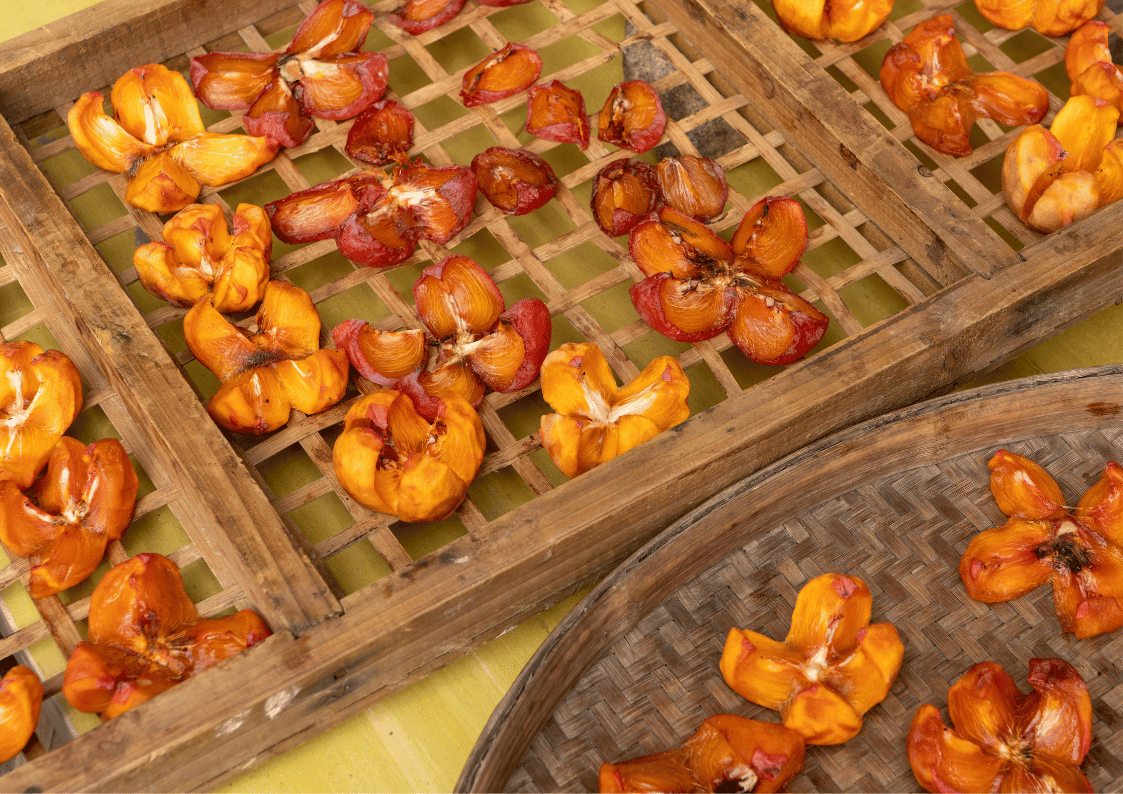
To give you a clearer picture, let’s take a look at the energy and sugar content of popular dried fruits (per 100-gram serving):
| Dried Fruit (100g) | Energy (Calories) | Estimated Sugar Content |
|---|---|---|
| Raisins | ~300 kcal | ~59g (Very High) |
| Dates | ~280 kcal | ~63g (Highly Concentrated Natural Sweetness) |
| Prunes | ~240 kcal | ~38g |
| Apricots | ~240 kcal | ~53g |
| Fried/Crispy Durian | ~500+ kcal | Moderate Sugar, but Calories and Fat Skyrocket |
💡 The Golden Rule: A small handful of most dried fruits (around 30–40 grams) yields roughly 100 calories, which is equivalent to eating half a bowl of steamed rice.
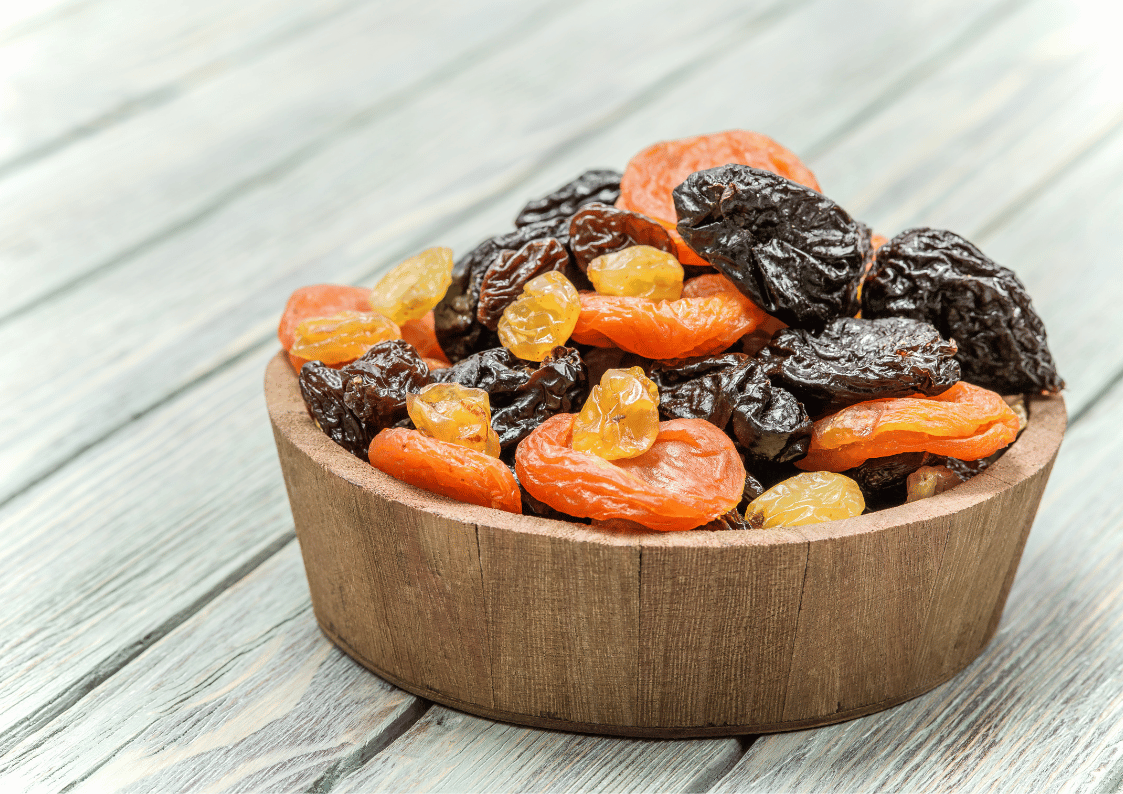
"Yes, but with extreme caution and by choosing the right type."
Diabetic patients do not need to cut out dried fruit entirely, as it still offers excellent dietary fiber and antioxidants. However, the key factor to consider is the Glycemic Index (GI), which indicates how quickly a specific food causes blood sugar levels to spike.
What to Strictly Avoid: Dried fruits with added sugar, candied fruits, honey-glazed dried bananas, or high-GI choices like dried dates.
What Can Be Eaten (In Moderation): Opt for 100% natural, unsweetened dried fruits that are high in fiber, such as prunes or dried apricots. These have a low-to-medium GI, allowing the body to absorb the sugar gradually.
⚠️ Crucial Tip: Limit portion sizes to no more than 1 tablespoon, or a maximum of one tiny handful per day. It is best to pair them with tree nuts (like almonds); the healthy fats and protein from the nuts will help prevent sudden blood sugar spikes.
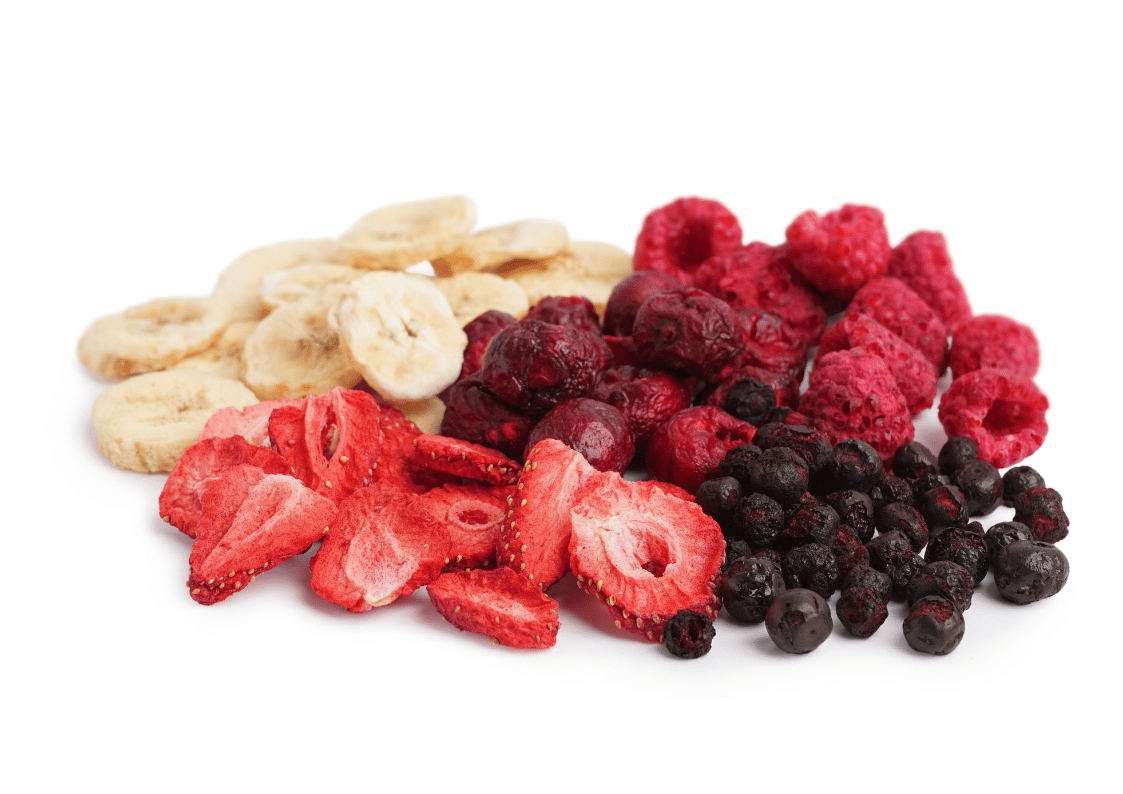
If you want a chewy snack without compromising your health, the best selection method relies on the "production process" and the “type of fruit.”
Freeze-Dried: This process uses extreme cold to remove moisture. It is the gold standard because it preserves nearly 100% of the original nutrients and vitamins. Plus, most freeze-dried options contain zero added sugar, making them perfect for weight loss.
No Added Sugar: Always check the nutrition label. Look for "0% added sugar" or a statement verifying it is "100% natural."
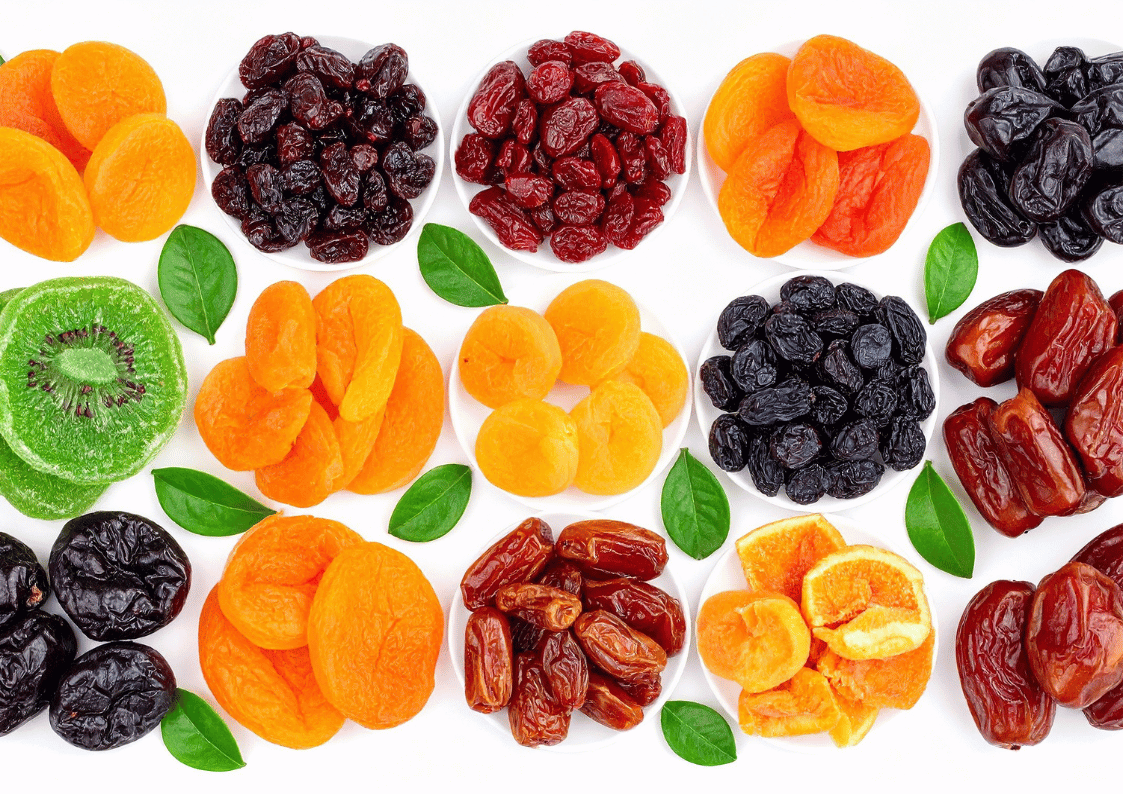
Prunes: The ultimate digestion champion. They are loaded with soluble fiber that helps lower cholesterol and feature a low glycemic index.
Apricots: Packed with vitamins A and C to support vision and skin health, and rich in potassium to help manage blood pressure.
Cranberries (Unsweetened): Renowned for their high antioxidant levels and their ability to help prevent urinary tract infections (UTIs).
Freeze-Dried Strawberries/Blueberries: Lower in calories compared to other groups, offering a crunchy, delicious texture with a naturally tangy-sweet flavor.
Whether dried fruit is good for your health ultimately comes down to two things: "portion control" and "reading the label." If you stick to natural, unsweetened varieties and limit your intake to one small handful a day (around 30 grams), it serves as an excellent snack that provides a wonderful boost of energy and fiber for your body!
$199 M.6, T.Nong Nam A.Mueang Lamphun 51000 , THAILAND
happydayfruit@gmail.com
+66 081 881 4126